
Site loading: MATRIA Biotechnology
Site loading: MATRIA Biotechnology
Partner With Us
MATRIA develops ZEROFERM, a non-GMO dual-stage fermentation platform designed to convert standardised food-industry side streams into yeast-derived ingredients.


MATRIA develops fermentation systems that connect industrial side-stream realities with the performance needs of next-generation ingredients.
We work at the intersection of fermentation-medium design, yeast bioprocessing and ingredient development.
Our core platform, ZEROFERM, is intended to turn selected food-industry side streams into standardised fermentation inputs and multiple development pathways.
Make claims in step with evidence.
Design input, process and output together.
Turn overlooked material into controllable value.
We welcome conversations with side-stream owners, food and ingredient companies, application teams, research organisations and industrial biotechnology partners.
A circular fermentation platform for transforming selected food-industry side streams into a more consistent medium — and that medium into several yeast-derived ingredient pathways.

Food-industry side streams can contain valuable carbon, nitrogen and micronutrients. Their composition, however, can shift across sources, seasons and processing conditions.
ZEROFERM is built around that tension. Instead of treating the side stream as a drop-in raw material, we develop the fermentation medium and the biological process as one system — separating growth and product-development priorities into a controllable, non-GMO architecture.

We assess composition, seasonality, variability and the practical constraints around selected food-industry side streams.

Pre-treatment and blending strategies are designed to create a more consistent, fermentable input system.

A non-GMO yeast process separates growth and product-development priorities into a controllable architecture.
Protein-rich biomass, fermentation-derived lipids and whole-broth routes are evaluated together.
Non-GMO describes the current platform design approach. Final product, regulatory and application claims will depend on validation and market context.
ZEROFERM is designed as a portfolio engine; not a single-output process. These materials are development-stage concepts; specifications, regulatory status and commercial availability have not yet been finalised.
A yeast-derived biomass route being developed for nutritional contribution and functional performance in food formulations.
A lipid route intended to broaden the palette available to food and personal-care product developers.

A route that explores the functionality of more complete fermentation outputs while reducing avoidable separation.

Beyond the core platform stages, MATRIA's R&D extends into mass-balance and lifecycle analysis, application formulation science, process scale-up and regulatory validation.
MATRIA brings together experts across multiple scientific and engineering disciplines to accelerate the development of next-generation fermentation technologies.

Ph.D. Microbial Genetics. 15+ years across microbial genetics, adaptive evolution, biotech, and quality/compliance. Drives sustainable microbial production and food innovation.

M.Sc. in Molecular Biology with expertize in high-throughput biotechnology manufacturing, bioprocess scaling. Founder of multiple biotech initiatives.

M.Sc. in Molecular Biology with expertise in biotechnology, computational biology, brewing science. 10 years of experience in quality management.
MATRIA advances ZEROFERM through European innovation programmes, national R&D support and development partnerships.

Supported research and development activity.
Completed programme supporting ventures aligned with circular and regenerative futures.
Programme details to be confirmed.
Grant Agreement No. 101310935 · Project start: 1 July 2026
Selected for the 2026 cohort.
Selected for the Autumn 2026 programme.
This project has received funding from the European Union under Grant Agreement No. 101310935. Views and opinions expressed are however those of the author(s) only and do not necessarily reflect those of the European Union or the European Innovation Council and SMEs Executive Agency (EISMEA). Neither the European Union nor the granting authority can be held responsible for them.
Our impact logic begins with a practical question: how can more of an existing material stream become useful input — and more of the fermentation output become valuable ingredient?

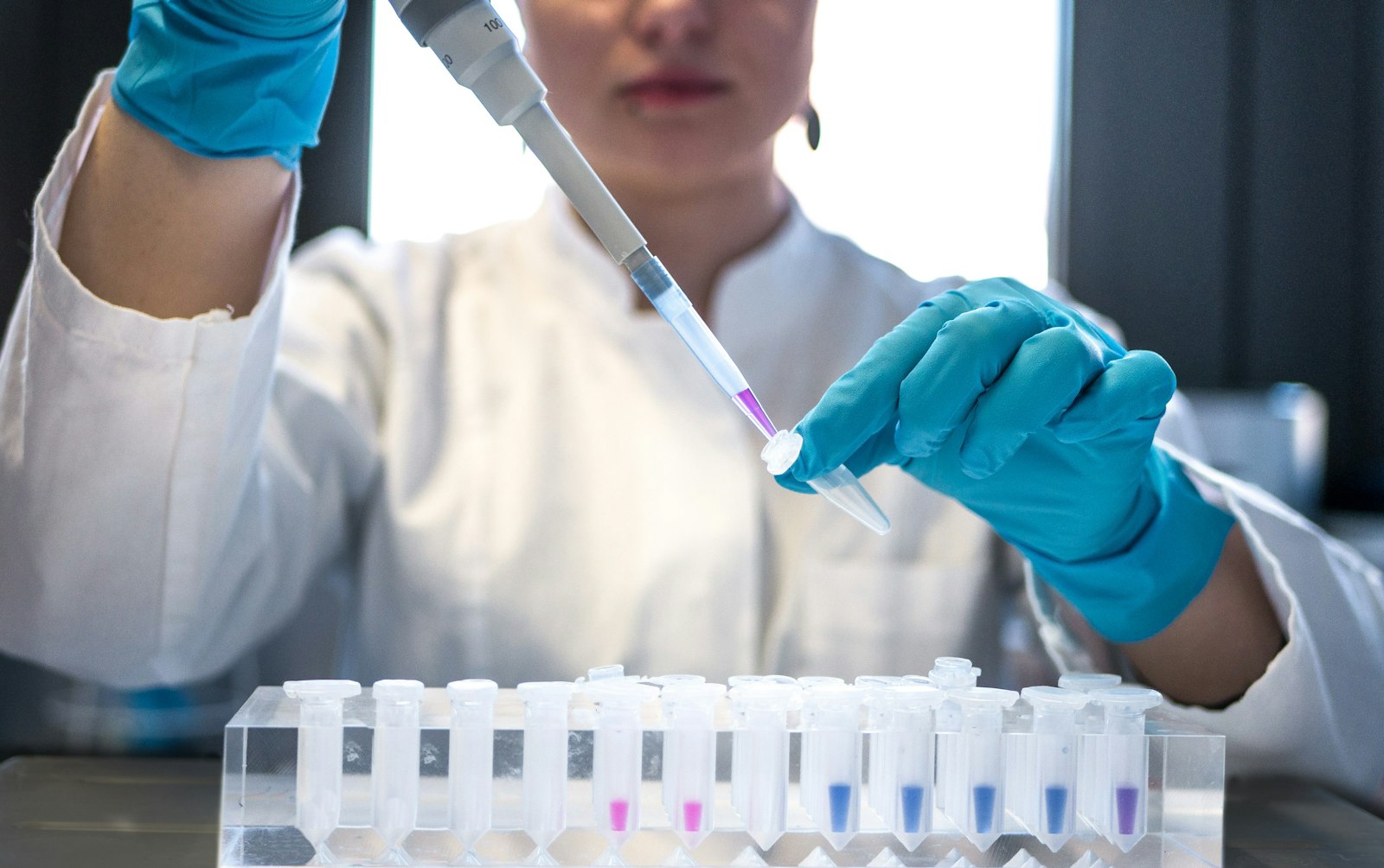
We work with food-industry partners, ingredient developers, application teams and research organisations. Have a side stream, formulation challenge or scale-up question? Let's talk.
Start a Conversation